

Discover the top 5 proven methods for assessing high-quality backlinks on Unlocking Success. Enhance your SEO strategy with expert techniques today!
Table of Contents
1. Introduction to Backlinks

There are several methods for obtaining backlinks to a website. Possibly the most common methods include: 1. Purchasing them by trading/buying from publishers. 2. Obtaining them by marketing strategies like business spotlight. Free resources, press releases and google advertisements. 3. Creating and publishing content (forums, blog comment section, guest posting). Given that the website is family-friendly. Easy to navigate and contains a substantial amount of public traffic. Then there should not be ethical considerations on owning or trading backlink. This can especially be the case where a blog owner needs. To immediately build traffic and readership from their backlink website.
A critical aspect in getting good ranking positions is obtaining quality backlinks. The backlink strategy is a form of link or hyperlink. That originates from one web page. At domain A. And targets a page. Resource or domain B. Backlinks are crucial for building consistent high SEO rankings. Every study is related to search engine optimization. And high ranking has consistently shown the quality and trust. That search engines are placed on a website. At its foundation, a strong reliance on the websites receiving backlink. A good rule of thumb is that websites. That are more relevant will provide greater quality backlinks.
2. Types of Backlinks and Quality Indicators

An extensive analysis of the structure and characteristics of backlink strategy. Is the key process for the proper creation of semantic cores. Based on the contents of the reference base. the estimated effectiveness of link building is ranked. Along with the assessment of the attractiveness and planning of website development. There are features and nuances in the use of each backlink list. That should be taken into account when promoting the site. In this chapter, we formulate the quantitative and qualitative indicators. That is essential for the classification of backlinks. On the basis of the actual ways in which pages can interact.
A necessary element that can influence the ranking of a site. In organic search results is to create quality backlinks. These are incoming references to pages that carry a link. In other words, this term refers to a hyperlink that leads to a specific resource. In addition to their key importance. In the functioning of the search engine resource ranking algorithms. Backlinks are for site optimization. An integral part of an effective complex of external factors. In the post-Google era of modern SEO. The development of a coherent system. And high quality backlink mass has grown in significance.
3. Methods for Evaluating the Impact of Backlinks
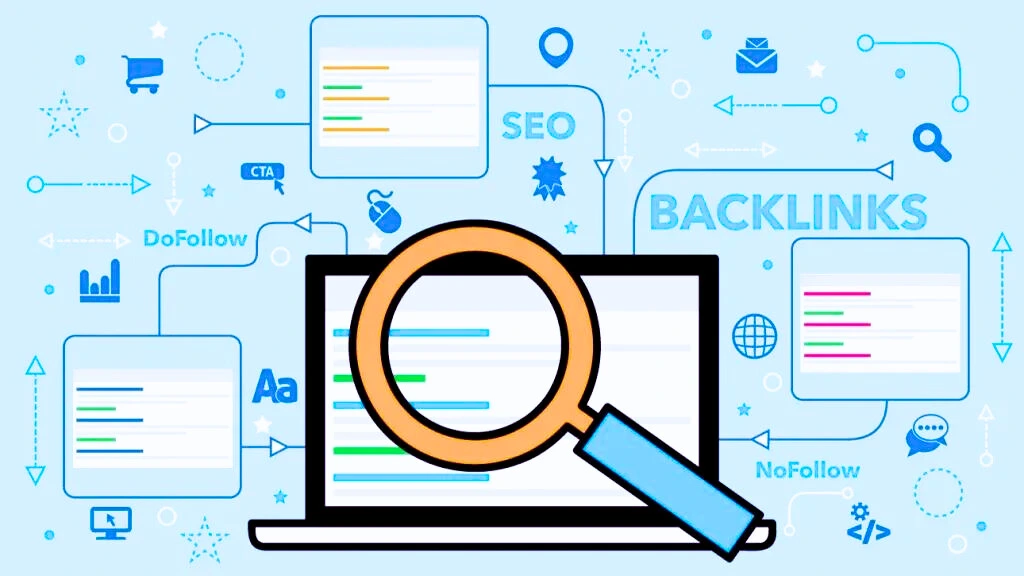
To keep up with the use of new ranking systems, search engines introduced Google PageRank. Which is an algorithm used by the Google Search engine to rank web pages in the search engine results. PageRank is a way to measure the importance of website pages. It does not include the ranking of the websites. But the relation between web pages, the number, and quality of backlinks. These methods are easily fooled by new techniques like mass-link buying. Empty page exchanges, dark web PBNs, and so on. That is why many ranking techniques have been introduced later on. All of these methods actually evaluate the importance of a backlink. And try to detect the spam backlink at the same time.
The impact of do follow backlink sites on a website is still understudied. And not fully understood. As there is no consensus on what are the best metrics one should use to determine the importance of a backlink. Currently. The complexity of evaluation lies in a large number of free backlink website lists. That needs to be maintained. The best and most reasonable way is to use various metrics to evaluate the importance of a website.
On the other hand, search engines have used backlink as an additional measure. Of the importance of the website. From the very beginning. Web pages were ranked by evaluating the website structure. After which came the Anchor Text and page-level criteria. Today, the highest ranking is achieved with the use of link-level metrics. Domain-level link metrics, and URL-level criteria.
4. Case Studies and Practical Applications

Innovation has been referred to as ‘the generation, acceptance. And implementation of new ideas, processes, products, or services’. To think a little more broadly. It goes hand in hand too with creativity and problem-solving of any description. Innovation drives competitive economies and growth. And involves tapping into invention and creativity. to deliver value from knowledge and task execution. It is summarised as commercially applicable. Or exploiting new knowledge to the greatest possible effect. This does not have to mean direct commercial interaction. It could just be that new knowledge gained could directly benefit society.
Related guide: Create High Quality Backlinks
As such, innovation is publicly funded across many countries. And is a significant part of total research and development activities. As academic researchers involved in funded research projects. We not only have to collaborate but have to show the value delivered as outcomes from this work too.
It is no secret to anyone involved in academic research. That the university experience is only one part of the equation. And that partnership with industry is a critical part of relevant research. The creation and sharing of innovation is a very important driver. For future success of both the academic and business institutions. Each has a unique set of skills and capabilities. That can complement and enhance the other. Resulting in a complete research pathway through the creation of relevant research.
Student education and final use of research outputs into everyday services or products. Providing dialogue, creating vision and shared goals. democratisation of the decision-making process, funding and resources. And recognition and rewards are important. But success occurs through action, practical application and consequential research findings.
5. Conclusion and Future Directions

Conclusion research invariably provides a synoptic view, whether retrospective or prospective. In the former case, by bringing all of the remarks made in the Introduction together. It underscores the importance of particular components of the Introduction. Forward-looking, written with different goals in mind. It can be nearly as widely useful. There comes a time when the feedback from readers, other researchers. And the advance of knowledge converges to the point that one is able to draw inferences about. The potential implications of the results for general principles, relationships. Or theory, across a wide variety of disciplines. Researchers usually operate under disciplinary constraints. Focusing on particular areas and avoiding sallies into more general considerations.
At its best, research contributes new information and understanding. Extending the frontiers of knowledge. As such, researchers themselves are always hard-pressed. To sum up the results of their research. Recalling the old story of the Ph.D. candidate who made a small advance in his field. When he was asked to set forth the results of his study. He proudly replied, “My understanding is far ahead of the literature on the topic.” Concluding research is particularly significant.
Taken by itself, conclusions are actually a rather modest component of scientific literature. Despite the effort involved in writing them. Concluding research is not valued for its potential. To generate a real leap forward in frontiers of knowledge. Of the kind that may be expected from framing a research hypothesis. And then designing and conducting an empirical study to test it.
About the Author

Excellent blog very informative
Excellent blog
This blog blog for freelancers
Great blog for working or understand backlinks
Impressive blog it is very usefull to understand the blacklonks